






Can Everyone Use Your Website?
Imagine someone lands on your website, likes what they see, and wants to contact you. But they can’t use your menu or complete your form.
You’ve put thought into welcoming people into your business. Your website should offer that same welcome.
That’s what website accessibility is about: making sure people with disabilities can find information and interact with your business online.
Some visitors use screen readers. Others navigate with a keyboard instead of a mouse, need captions on videos, or enlarge text to read it comfortably. Those needs deserve consideration when your website is being built.
It’s part of good web design.
Accessibility involves decisions that might seem small but make a big difference:
- Text that has enough contrast to be readable.
- Menus and forms that work without a mouse.
- Helpful descriptions for images.
- Clear headings and links.
- Captions for videos with spoken content.
Every website we design and build uses WCAG 2.2 Level AA as its accessibility standard. We aim to meet those guidelines as part of our process.
You don’t need to memorize that alphabet soup. It’s a set of requirements that helps us make thoughtful decisions about how people use your website.
Accessibility is also a legal responsibility for businesses covered by the ADA. The Department of Justice explains that this includes services offered online. Being a small business does not automatically exempt you.
Be careful with the “quick fix.”
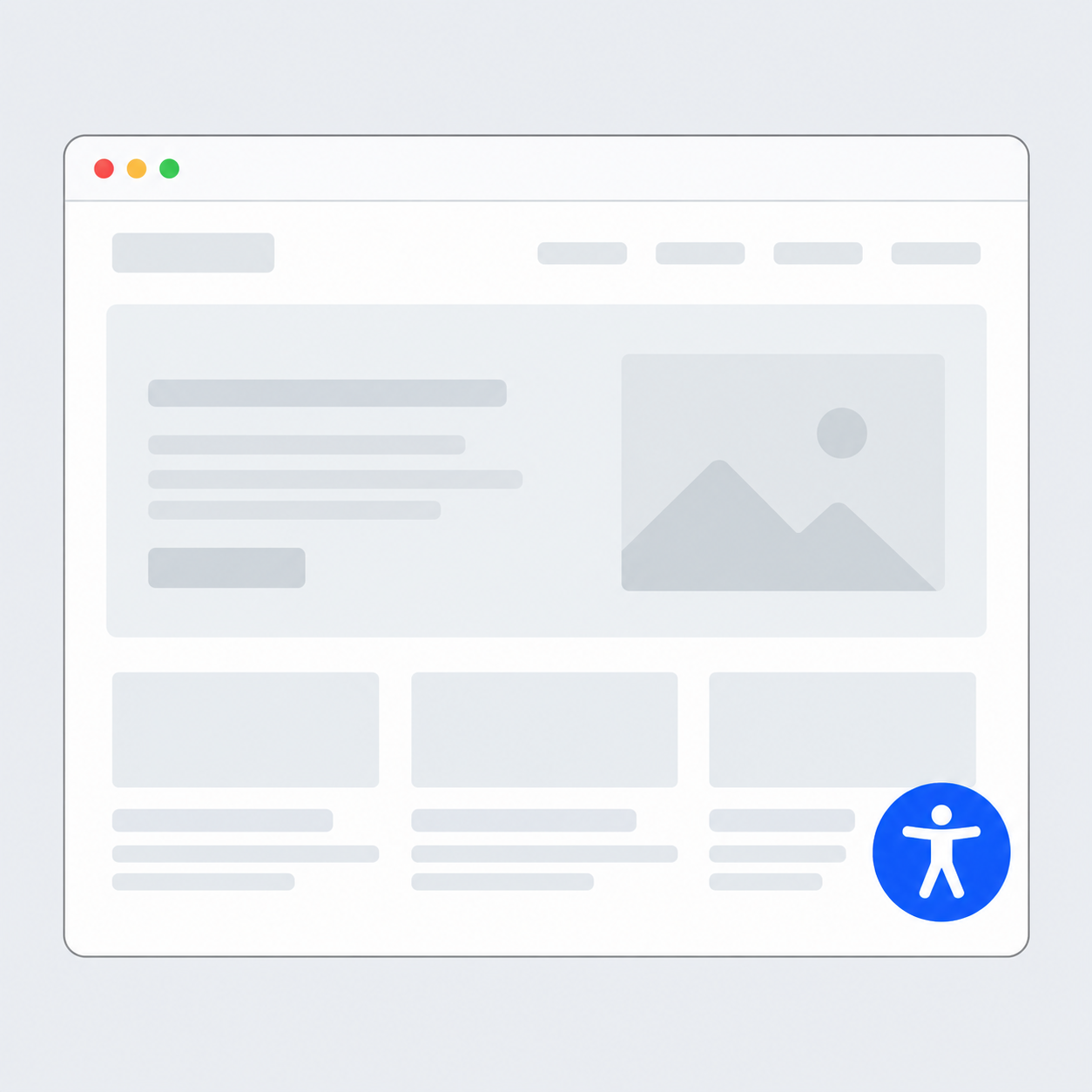
You’ve probably seen the little accessibility button floating in the corner of a website. Some companies sell these tools, called overlays, with promises that they’ll handle accessibility for you.
I understand the appeal. Install a plugin, check a box, and move on. And it makes sense to us, right?
But overlays cannot replace the work of building an accessible website. They can even interfere with the tools people with disabilities already use, as the University of Michigan’s accessibility team explains.
In 2025, the FTC finalized an order requiring accessiBe to pay $1 million to settle allegations about misleading claims that its overlay could make any website meet accessibility guidelines.
That little button isn’t proof that the website behind it is accessible.
Where do you start?
Accessibility deserves attention when your website is built and as it changes. Some projects also benefit from a specialist’s testing and support. When that expertise is needed, we can point you in the right direction.
Want the details? Read our updated guide to website accessibility and the standards behind our approach.
And if you’re wondering how well your website serves your visitors overall, our Website Audit looks at your messaging, design, and usability, helping you understand what’s working and where it could improve.